Sacred Ways © 2026
Chavín de Huántar: The Ancient Heart of Andean Ceremony
How a 4,000-year-old temple complex became the birthplace of Andean civilisation — and why it still matters
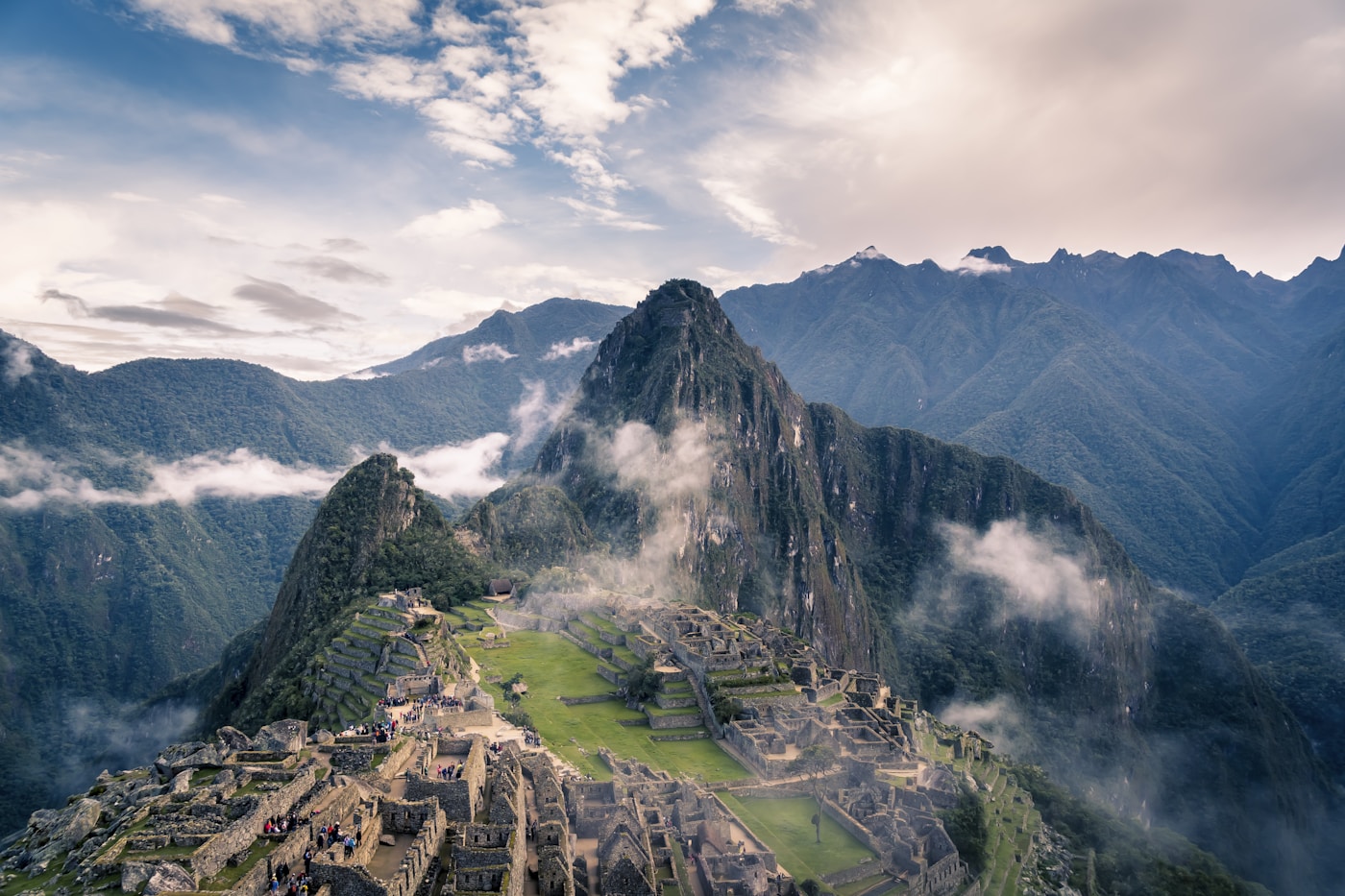
High in the Andes of northern Peru, at an elevation of over 3,000 metres where the Mosna and Huachecsa rivers converge, stands one of the most extraordinary ceremonial complexes ever built by human hands. Chavín de Huántar is not merely an archaeological site — it is a living ceremonial landscape that has shaped the spiritual traditions of an entire continent, and whose influence can still be felt in the Huachuma ceremonies conducted in its shadow today.
The site was designated a UNESCO World Heritage Site in 1985, recognised as "an outstanding example of the early development of Andean civilisation." But the dry language of heritage designation barely begins to capture what Chavín de Huántar actually is: the place where, over 4,000 years ago, a sophisticated ceremonial culture developed the practices, iconography, and sacred plant traditions that would form the foundation of every major Andean civilisation that followed — including the Moche, the Wari, and ultimately the Inca.
The Chavín Culture: Cradle of Andean Civilisation
The Chavín culture flourished between approximately 900 BCE and 200 BCE, though the site itself shows evidence of occupation and ceremonial use dating back to at least 1500 BCE. At its height, Chavín de Huántar was a major pilgrimage destination, drawing people from across the Andes and the Pacific coast to participate in ceremonies that combined sophisticated architectural design, complex iconography, and the ritual use of sacred plants — most significantly, Huachuma.
The architecture of Chavín de Huántar is itself a ceremonial instrument. The main temple complex, known as the Castillo, is a massive stone structure containing an elaborate network of interior galleries, ventilation shafts, and ceremonial chambers. These galleries were designed to produce specific acoustic and sensory effects — the sound of conch shell trumpets (pututus) reverberating through the stone corridors, the play of light and shadow through carefully positioned shafts, the disorienting geometry of the interior spaces. The entire complex was engineered to facilitate altered states of consciousness and encounters with the sacred.
The Lanzón: Axis of the Ceremonial World
At the heart of the Castillo, in a cruciform gallery deep within the stone, stands the Lanzón — a 4.5-metre granite monolith carved with one of the most complex and enigmatic images in pre-Columbian art. The figure depicted is a composite being: part human, part feline, part serpent, with fanged mouth, clawed hands, and elaborate headdress. It represents the central deity of the Chavín ceremonial system — a being that embodies the integration of the three realms of Andean cosmology: the upper world of sky and condor, the middle world of human and feline, and the lower world of earth and serpent.
The Lanzón is not merely a sculpture — it is a ceremonial axis, a point of contact between worlds. Ceremonies conducted in its presence were understood as direct communications with the forces that govern existence. The participants who came to Chavín de Huántar were not tourists or spectators; they were pilgrims seeking transformation, healing, and access to knowledge that ordinary consciousness cannot reach.
Huachuma and the Chavín Ceremonial Tradition
The evidence for Huachuma use at Chavín de Huántar is extensive and unambiguous. Carved stone reliefs throughout the complex depict figures holding Trichocereus cacti — the same columnar cactus that is prepared as Huachuma medicine today. Ceramic vessels in the shape of Huachuma columns have been recovered from the site. The iconography of the Chavín style — its emphasis on transformation, on composite beings that cross the boundaries between species and realms, on the dissolution of ordinary categories — is entirely consistent with the phenomenology of Huachuma experience.
What this means is that the Huachuma ceremonies conducted in the Chavín tradition today are not reconstructions or revivals — they are continuations. The lineage that runs from the great ceremonies at Chavín de Huántar, through the Moche and Lambayeque cultures of the north coast, to the living tradition of the Chavín Huachuma mesa as practised by contemporary maestros, represents one of the longest unbroken ceremonial lineages in human history.
Why Sacred Sites Matter for Ceremony
There is a question that serious seekers sometimes ask: why does it matter where a ceremony is conducted? Can the medicine not be worked anywhere? The answer, from the perspective of the Chavín tradition, is that place is not incidental to ceremony — it is constitutive of it. The land at Chavín de Huántar, and at the other sacred sites of northern Peru, has been worked ceremonially for so long and with such intensity that it carries a quality of presence that is palpable even to those with no prior experience of plant medicine.
This is not mysticism for its own sake. It is a recognition that human beings are not separate from the landscapes they inhabit, and that landscapes carry the history of what has been done within them. A ceremony conducted at Chavín de Huántar, or at the Huaca de la Luna, or at any of the other sacred sites of the Andean ceremonial tradition, is a ceremony conducted in conversation with 4,000 years of accumulated ceremonial intention. That conversation changes what is possible.
For those who come to Peru with Sacred Ways, the visit to these sites — whether in ceremony or in the clear light of the following day — is often described as one of the most significant experiences of their lives. Not because of what they are told about the history, but because of what they feel when they stand in these places and allow themselves to be present to what is there.
Ready to Begin?
Para El Bien De Todos
Continue Reading