Sacred Ways © 2026
Don Howard Lawler and the Living Legacy of the Chavín Huachuma Tradition
Remembering the Maestro who brought the most ancient of Andean ceremonial traditions to the modern world
Don Howard Lawler — known to those who worked with him as the White Wizard of the Andes — spent over fifty years in direct relationship with the Huachuma medicine and the sacred traditions of northern Peru. He was a trained ethnobiologist, a curator at natural history institutions in the United States, a prolific writer on ecological and conservation topics, and, above all, a Shamanic practitioner of extraordinary depth and integrity. He passed from this world on October 13, 2019, at the age of 72. But the tradition he carried and transmitted continues, alive in the facilitators he trained and the thousands of lives he touched.
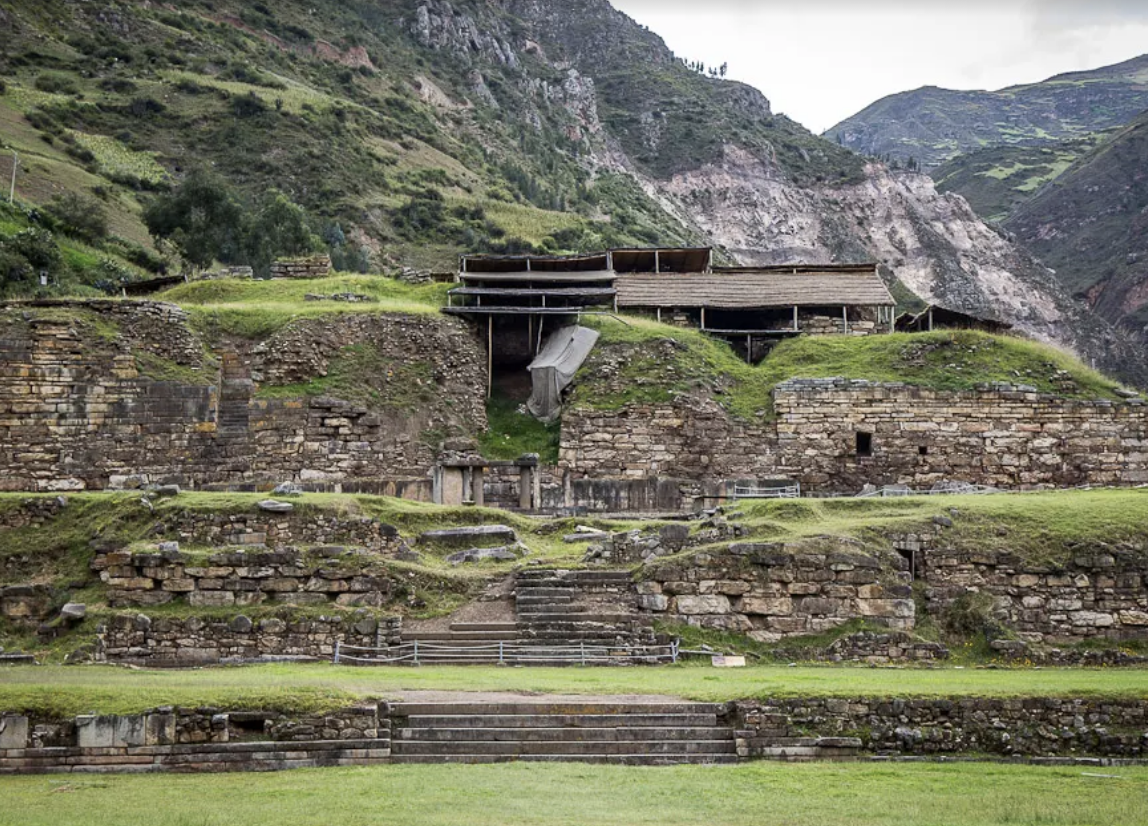
Don Howard founded SpiritQuest Shamanic Sanctuary in the Iquitos region of Peru, which became one of the most respected centres for authentic Shamanic practice in the world. His work was rooted in the Chavín Huachuma mesa tradition — the most ancient and sophisticated of the Andean Huachuma lineages, predating the Inca by over 2,500 years and originating in the ceremonial practices of the Chavín culture at the great temple of Chavín de Huántar.
A Life in Service to the Tradition
Don Howard's path to the Huachuma tradition was not a sudden conversion but a gradual deepening that began in the 1960s and continued without interruption for the rest of his life. His background in biology and ethnobiology gave him a rigorous scientific framework for understanding plant medicine — not as mysticism divorced from the natural world, but as a sophisticated technology developed over millennia for navigating the relationship between human consciousness and the living systems of the Earth.
What distinguished Don Howard from many Western practitioners who have worked with plant medicine is that he did not approach the tradition as a consumer or a tourist. He apprenticed himself to it, with the patience and humility that genuine apprenticeship requires. He learned the language, the land, the plants, and the ceremonial protocols of the Chavín tradition with the same rigour he brought to his scientific work. And he spent decades in direct relationship with the indigenous communities of the Peruvian Amazon and Andes, supporting their health, education, and cultural preservation in ways that went far beyond the ceremonial context.
The Chavín Huachuma Mesa: What Makes It Distinctive
The Chavín Huachuma mesa is not simply a ceremony in which Huachuma medicine is consumed. It is a complete ceremonial system — a sophisticated integration of sacred objects, songs, prayers, spatial arrangement, and relationship with the land — that has been refined over 4,000 years of continuous practice. The mesa itself is a ceremonial altar, a physical map of the cosmos as understood by the Chavín tradition, in which the forces of creation, transformation, and healing are represented and invoked.
Don Howard understood the Chavín mesa as the most advanced expression of Andean ceremonial science. Its sophistication lies not in complexity for its own sake but in its precision — its capacity to create conditions in which genuine healing and transformation become possible, reliably and safely, for participants who come with sincere intention and appropriate preparation. This precision is the product of thousands of years of accumulated ceremonial knowledge, transmitted from teacher to student across an almost incomprehensible span of human history.
The Transmission Continues
Don Howard's most important legacy is not the institution he built or the writings he left behind, but the tradition he transmitted — the living knowledge of the Chavín Huachuma mesa, passed on to the facilitators he trained and the communities he supported. This transmission is not merely intellectual. It is experiential, relational, and deeply personal — the kind of knowledge that can only be received through direct ceremonial experience and sustained apprenticeship.
The facilitators who carry this tradition forward do so with a profound sense of responsibility. Don Howard's standard was uncompromising: the medicine must be worked with absolute integrity, in service to the healing and transformation of those who come, with no personal agenda and no shortcuts. His motto — Para El Bien De Todos, "For the Good of All" — was not a slogan but a description of the orientation from which all genuine ceremonial work must proceed.
Sacred Ways and the Chavín Lineage
Sacred Ways was founded in direct relationship with the tradition that Don Howard carried. The Huachuma pilgrimage in Peru works within the Chavín Huachuma mesa lineage, conducted at the sacred sites of northern Peru where this tradition has been practised for millennia. The facilitating team has trained within this lineage and holds the same standard of integrity and service that Don Howard exemplified throughout his life.
To participate in a Sacred Ways pilgrimage is, in a real sense, to enter into relationship with this lineage — with the 4,000 years of ceremonial knowledge that flows through it, with the land and the plants that are its living expression, and with the spirit of Don Howard himself, whose presence at SpiritQuest Sanctuary is described by those who knew him as very much alive, even now. Para El Bien De Todos.
Ready to Begin?
Para El Bien De Todos
Continue Reading